
Persistent Sheaf Laplacian
Orientation-Independence
Machine-checked proof that the persistent sheaf Laplacian's kernel dimension, characteristic polynomial, and full eigenvalue spectrum are invariant under arbitrary simplex orientation changes. First formal verification of spectral-level orientation-independence for this central TDA operator.

Guo-Wei Wei
MSU Research Foundation Distinguished Professor of Mathematics & Biochemistry, Michigan State University
Pioneer of persistent Laplacians and their applications to molecular bioscience. Developed the persistent sheaf Laplacian framework for fusing geometric and physical data in topological data analysis.
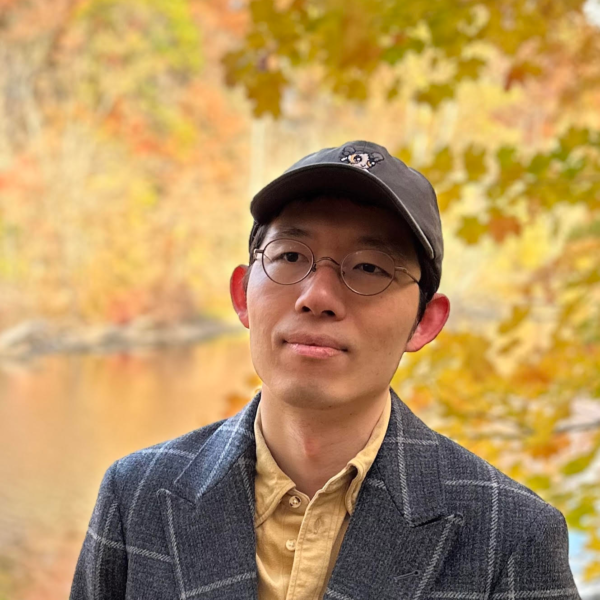
Xiaoqi Wei
Postdoctoral Research Scholar, Department of Mathematics, North Carolina State University
Co-developer of the persistent sheaf Laplacian theory. Research focuses on topological methods in biology and multi-scale data analysis using sheaf-theoretic tools.
| PAPER SECTION | LEAN MODULE | STATUS |
|---|---|---|
| Simplicial complexes and q-simplices | Basic.SimplicialComplex | PROVED |
| Orientation infrastructure and permutation signs | Basic.Orientation | PROVED |
| Cellular sheaves on simplicial complexes | Basic.CellularSheaf | PROVED |
| Sheaf cochain complex and coboundary maps | Cochain.CochainComplex + CochainMatrix | PROVED |
| Hodge-type sheaf Laplacian definition | Laplacian.SheafLaplacian | PROVED |
| Spectral theory and canonical definitions | Laplacian.Spectrum | PROVED |
| Orientation-independence (core result) | Laplacian.OrientationIndependence | PROVED |
| Persistent filtrations | Persistent.Filtration | PROVED |
| Persistent coboundary and Laplacian | Persistent.PersistentCoboundary + PersistentSheafLaplacian | PROVED |
| Persistent Betti numbers | Persistent.BettiNumbers | PROVED |
| Constant sheaf reduction to graph Laplacian | Applications.ConstantSheafReduction | PROVED |
| Multi-sensor data fusion application | Applications.DataFusion | PROVED |
The coboundary matrix under orientation o₁ is a diagonal ±1 conjugate of the coboundary under o₂.
The sheaf Laplacian transforms by diagonal sign conjugation under orientation change.
The kernels of the Laplacian under different orientations are linearly isomorphic.
Harmonic sheaf nullity is independent of orientation choice.
The characteristic polynomial is invariant under orientation change.
The full eigenvalue spectrum is orientation-independent.
Permutation sign decomposes predictably when a shared vertex is erased from two orderings.
Signed incidence numbers factor through orientation simplex signs.
The orientation sign matrix is self-inverse (involutory).
The kernel dimension under any orientation equals the canonical harmonic sheaf nullity.
The spectrum under any orientation equals the canonical sheaf Laplacian spectrum.
Hover over nodes to trace the proof spine from foundational infrastructure through core Laplacian theory to persistent and application layers.
Lean Proof Artifacts
lean-proofs.tar.gzComplete Lean proof surface (14 modules + lakefile).\u2193OrientationIndependence.leanCore result: diagonal sign conjugation → spectral invariance.\u2193Orientation.leanOrientation infrastructure: reorder permutations, signed incidence, sign decomposition.\u2193Spectrum.leanCanonical spectral definitions using sorted orientation.\u2193CochainComplex.leanSheaf cochain spaces and coboundary maps.\u2193Wei & Wei (2021). Persistent sheaf Laplacians. arXiv:2112.10906
14 modules, 184 declarations. Orientation sign infrastructure + spectral invariance.
lake build passes, 0 sorry/admit, all 14 modules compile against Lean 4 v4.24.0 + Mathlib.
Standalone researcher package with lakefile, build instructions, and full theorem inventory.
Formal Verification Certificate
The persistent sheaf Laplacian orientation-independence formalization has been verified as a standalone Lean 4 package. The central conjugation claim and all downstream invariance theorems are kernel-checked with zero sorry placeholders.
Persistent Sheaf Laplacian • Lean 4 + Mathlib • Apoth3osis Labs